Pancreatic Cancer Floral Boots Tumbler Review
As a designer who spends hours testing machine embroidery designs before they ever touch a customer's garment, I approach every new download with a mix of excitement and skepticism. The Pancreatic Cancer Floral Boots Tumbler caught my eye not just for its unique concept, but for the specific challenge it presents: blending a heavy, meaningful message with delicate floral elements and sturdy boots. This isn't just another generic graphic; it is a statement piece that requires careful consideration regarding how it translates from a digital file to a stitched reality.
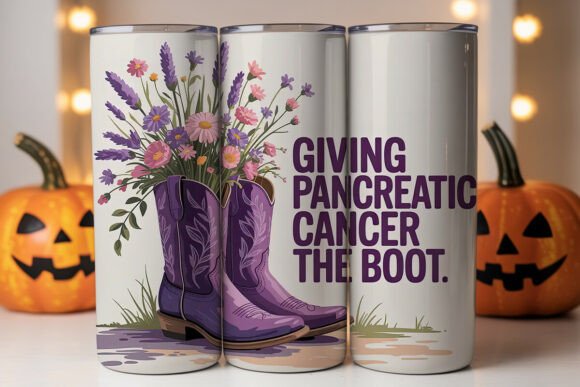
The product listing provides two high-resolution PNG files at 300 DPI, one straight and one tapered, both measuring 9.3" x 8.2". While these are technically graphics rather than native stitch files like .DST or .PES, their utility as a reference for digitizing or as a print-on-demand asset for tumbler wraps is significant. In this review, I am evaluating how this design functions in the broader context of an embroidery project, focusing on visual impact, practical application, and the emotional resonance it brings to handmade products.
First Impressions and Design Personality
The moment you look at the Pancreatic Cancer Floral Boots Tumbler, you feel a shift in mood. It strikes a balance between resilience and softness. The inclusion of floral motifs suggests hope and growth, while the boots anchor the design in strength and endurance. For a designer, this duality is gold. It allows for versatility in color palettes; you can choose soft pastels for a gentle nursery vibe or bold, dark hues for a serious awareness campaign.
Visually, the layout is robust. At nearly ten inches tall, this design commands attention without feeling overwhelming. The "tapered" version mentioned in the file list is particularly interesting. In the world of tumblers and curved surfaces, a straight rectangle often looks awkward. A tapered shape mimics the contour of a cup, suggesting that this design was thoughtfully created to wrap around cylindrical objects. Even if you are planning to digitize this into a true embroidery file, understanding this taper is crucial for maintaining the integrity of the text and imagery when stitched onto a curved surface.
Real-World Application: From Screen to Stitch
I recently considered using this design concept for a custom line of tote bags and aprons intended for a local charity fundraiser. The goal was to create merchandise that honored survivors while remaining stylish enough for daily wear. Here is how the Pancreatic Cancer Floral Boots Tumbler would perform in that scenario.
For a tote bag, the straight version of the design offers a large canvas. You could place the floral elements on the side panels and center the boots and text on the front. However, because the source files are PNGs, a savvy designer knows they cannot simply hit "print and stitch." If you are using this as a guide for digitizing, the density of the floral details must be carefully evaluated. Satin stitches work beautifully for outlining the boots, providing a smooth, durable finish that resists fraying. Fill stitches are necessary for the flower petals to ensure they don't pucker on heavy cotton canvas.
Imagine a small boutique selling personalized gifts. A customer orders a sweatshirt for a friend battling pancreatic cancer. The Pancreatic Cancer Floral Boots Tumbler design, when adapted correctly, becomes a focal point on the chest or back. The 9.3-inch height fits perfectly within standard chest embroidery areas. The contrast between the intricate flowers and the solid boot shapes creates a dynamic texture that catches the light, making the finished product feel premium and thoughtful.
Navigating Technical Challenges
While the concept is strong, executing it requires technical precision. One of the first things I check when reviewing a design like this is the detail level relative to the fabric. The floral elements likely contain fine lines and curves. On a stretchy fabric like a jersey t-shirt or a thin polyester blend, these details can get lost or cause the fabric to gather unevenly. In such cases, a stabilizer is non-negotiable. Without proper backing, the tension of the satin stitch might pull the fabric too tightly, distorting the shape of the boots.
Another critical factor is the thread color selection. The design relies on the interplay between the bright, organic shapes of the flowers and the grounded tones of the boots. If you choose thread colors that lack sufficient contrast against the background fabric, the message gets muddled. For example, stitching a pale yellow flower on a cream shirt will result in a flat, indistinct image. You need deep greens or rich earth tones for the stems and boots to make the design pop. Always test your thread choices on scrap fabric first to ensure the saturation matches your vision.
There are also limitations to consider regarding hoop size. The 9.3" dimension is substantial. Not all home embroidery machines have hoops large enough to accommodate this width in a single pass. If your machine has a smaller hoop, you may need to split the design or use a larger commercial frame. Furthermore, if you intend to use this on a cap or a curved pillow, the straight version of the file will require significant re-digitizing to account for the curvature. The tapered version helps here, but even then, the transition from flat to curved must be seamless to avoid bunching at the edges.
Impact on Brand and Customer Trust
In the competitive world of Etsy sellers and craft businesses, the quality of your design speaks volumes about your professionalism. A sloppy execution of a powerful theme like pancreatic cancer awareness can undermine the entire purpose of the item. Conversely, a clean, well-stitched Pancreatic Cancer Floral Boots Tumbler design builds immediate trust. Customers are looking for items that show care and attention to detail. When the stitching is crisp, the colors are vibrant, and the alignment is perfect, the buyer feels confident that they are purchasing a high-value, heartfelt gift.
This design also excels in creating a cohesive brand identity. If you run a shop specializing in awareness merchandise, having a signature style—like combining nature motifs with strong symbols—helps customers recognize your work instantly. Whether it is used on a holiday gift set, a wedding favor, or a boutique display, the consistent visual language reinforces your brand's commitment to meaningful craftsmanship.
Practical Designer Notes for Success
Before committing this design to a production run, there are several steps every maker should take. First, verify the licensing terms. Just because you purchased a digital file does not automatically grant you the right to sell thousands of finished items. Check the specific terms for commercial use.
If you are converting this PNG into a stitch file, pay close attention to the stitch density. High-density fill areas can become stiff and uncomfortable, especially on baby clothes or delicate fabrics. You might need to reduce the density slightly to maintain flexibility. Additionally, inspect the small details. Tiny lettering or thin floral stems can break up during the embroidery process if the needle path is too tight. Test the design on black and white mockups to ensure the composition works regardless of color.
Finally, always run a test stitch on your actual production fabric. This reveals issues with thread tension, fabric puckering, or color bleeding that a computer screen simply cannot show. By taking these precautions, you ensure that the Pancreatic Cancer Floral Boots Tumbler design delivers the emotional impact it promises, turning a simple piece of cloth into a lasting symbol of support and strength.